


How White Shadow Carries Emotion Through Cinematography
Directed by Gloria Chee and shot by Director of Photography Lim Teck Siang, White Shadow is a meditation on mortality, intimacy, and the fragile courage to love. Set among Singapore’s liminal urban landscapes, the film follows two souls confronting an approaching end, where denial slowly transforms into a deeper, more boundless form of care. It is a story of love and loss, told with a restrained, naturalistic gaze and a dreamlike visual palette.
Finding Emotion in In-Between Spaces
Much of White Shadow unfolds in the everyday spaces of Singapore: corridors, bridges and walkways. These are not grand cinematic landscapes. They are familiar, transitional, often overlooked. Yet in the world of the film, they become emotional thresholds.

“The idea of exploring these spaces came first from director Gloria,” Teck Siang shares. “She wanted to find visual metaphors to express feelings of connection, change, ambiguity, transition, waiting, and suspension.”

For Teck Siang, these spaces were not chosen simply because they looked cinematic. They were intentionally chosen because they felt true to the emotional architecture of the story.
“We set out to find locations that were common in everyday Singapore, the kind we overlook,” he says. “That became the primary driving factor in how we composed the visuals.”

Rather than forcing meaning onto these spaces, Teck Siang’s cinematography allows them to hold feelings quietly.
Framing What Words Leave Unsaid
“White Shadow has minimal dialogue, so our actors had to carry these feelings on screen,” Teck Siang explains. “The scenes of them moving from space to space were not just driving the story forward — they were part of the story itself.”
For Teck Siang, camera and light became ways to express the unsaid. Instead of pushing emotions to the surface, the cinematography gives it room to emerge. A quiet glance. A pause in a doorway. The fall of soft light across a face. The weight of negative space between bodies. These details become the film’s emotional vocabulary.
A Palette of Restraint
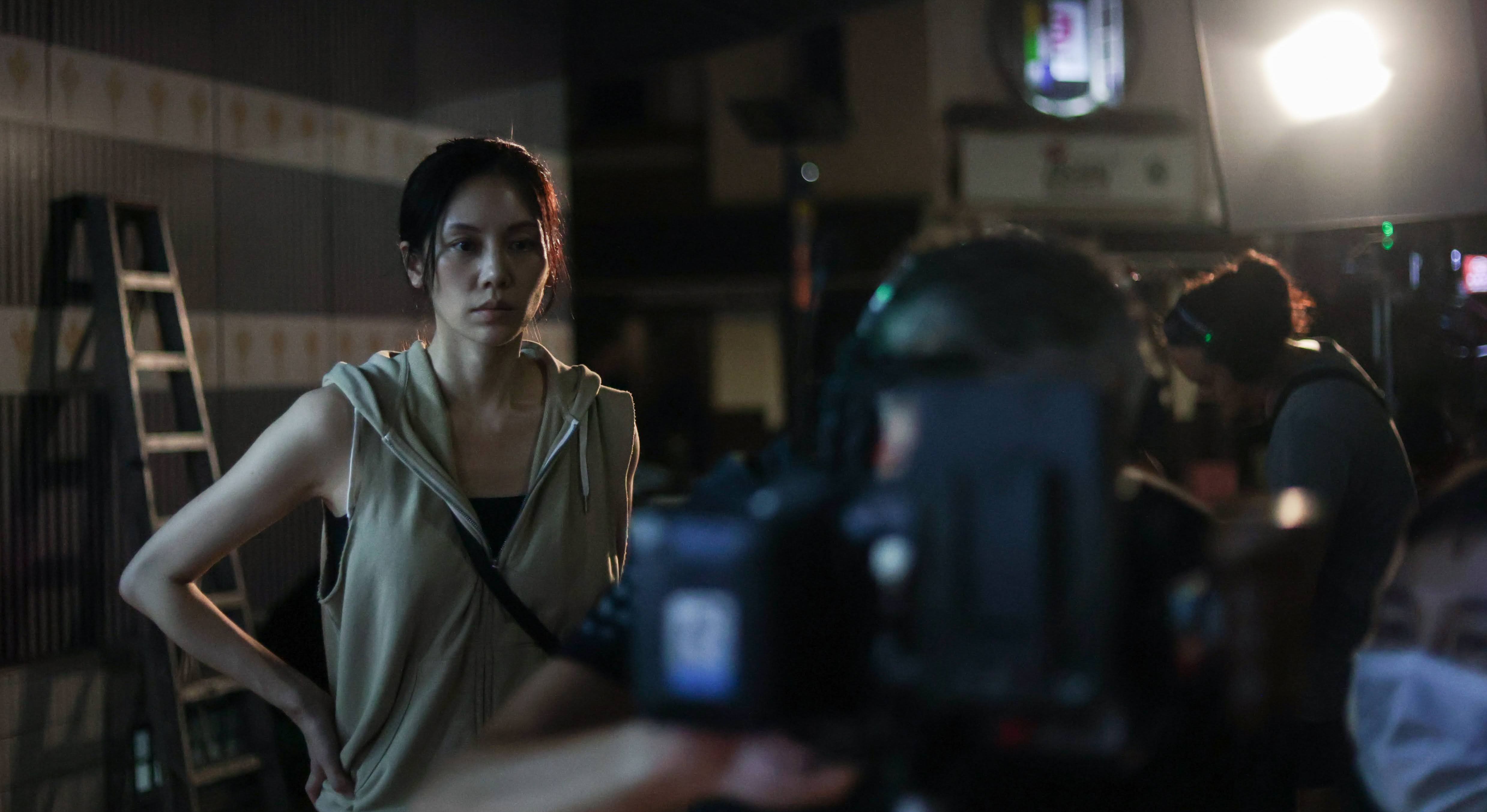
The visual world of White Shadow is defined by restraint. Its low-contrast, cool visual palette works in service of the film’s emotional temperature, amplifying subtle performances without overwhelming them.

“Director Gloria wanted a low-contrast, cooler palette throughout,” Teck Siang says. “We avoided warmer tones and deliberately toned down greens — we stayed away from locations with too much greenery. The overall mood was muted. We suppressed greens and strengthened blues in both day and night scenes, and lowering the contrast naturally brought in tones of grey.”
Low contrast softens the edges of the world. Cooler tones create a sense of distance, fragility, and suspended time. Suppressed greens and strengthened blues move the image away from everyday realism into something more interior, more dreamlike.
Working Small, Moving Light
Behind the film’s quiet visual language was a production that demanded agility.
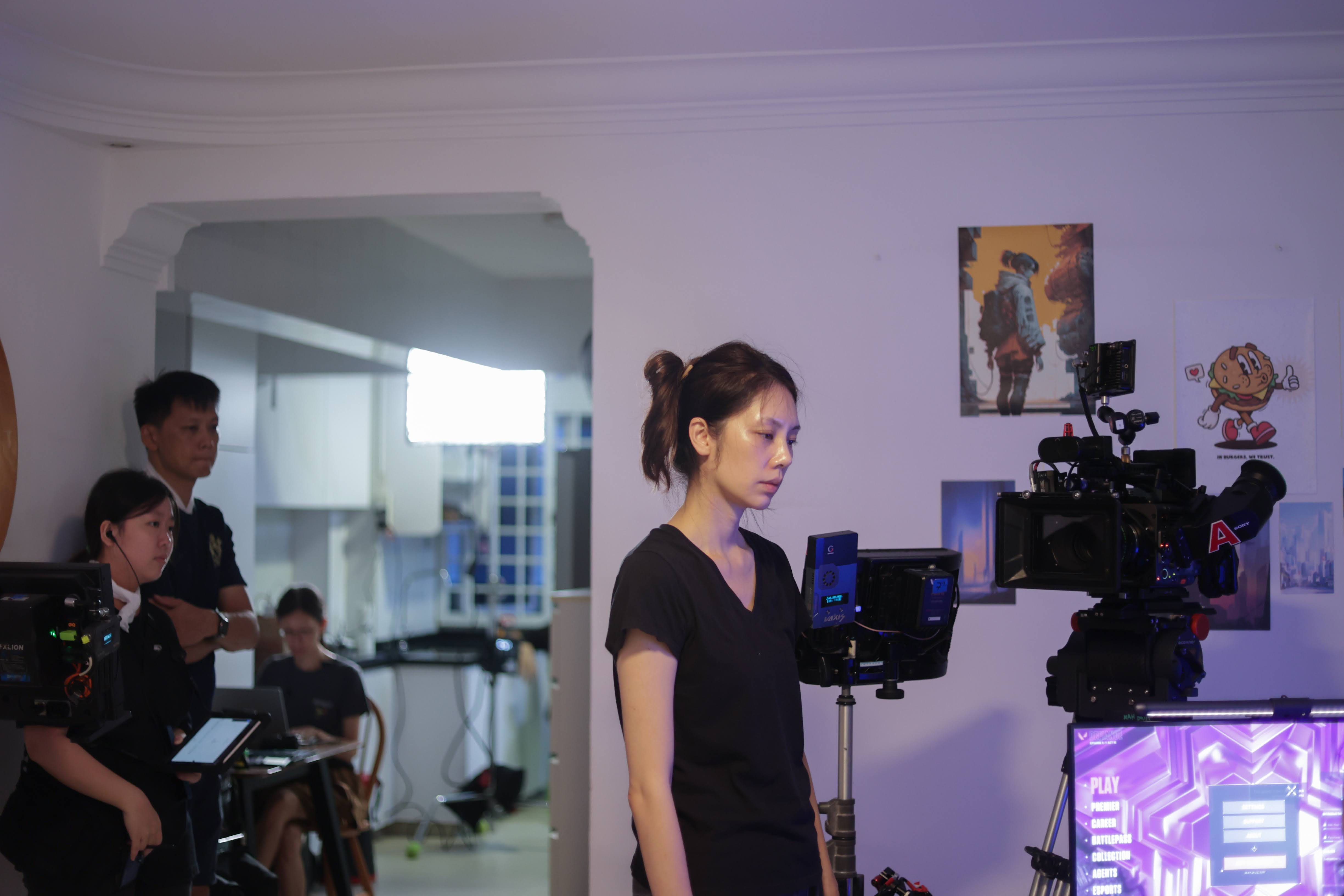
With a small crew, tight locations, and limited time, every setup had to be purposeful. Apartments, car interiors, night exteriors, and public spaces all came with their own constraints. The team could not rely on large lighting builds or heavy-handed control of the environment. They had to work quickly, lightly, and with a clear sense of what each scene needed emotionally.
“We had a small lighting team — one gaffer and two swings — and only had them for 10 of our 12 shoot days,” Teck Siang recalls. “The schedule was tight. So the main challenge was being fast, nimble and efficient, especially in night exteriors and interior scenes in public spaces.”

That nimbleness was not just about speed. It was about knowing what could be controlled, and what had to be embraced.
“We could only control the light on our talent, and we had to match that to the environmental lighting we couldn't touch,” he adds.

There is less room for equipment, fewer places to hide lights, and less flexibility in camera placement. But those limitations can also create a particular kind of intimacy. The frame becomes closer. The environment presses in. The characters feel more contained by the world around them.
Protecting the Image in Post
Because the film relied on subtle shifts in contrast, colour, and shadow, the team needed a workflow that could protect those choices from set to grade.
For Teck Siang, that meant testing the BURANO under the actual conditions of the film before committing to the final approach.
“To understand the limits of the X-OCN LT codec, we ran an under/over exposure test,” he says. “Working closely with colourist Chen Junbin, we set the camera EI to 500 in Low Base ISO 800, and 1600 or 2000 in High Base ISO 3200.”

This was not a purely technical exercise. It was a way of giving the creative team confidence. With a low-contrast look, darker areas and lower midtones needed to hold detail without introducing unwanted noise.
“Rating below the base ISO shifted the dynamic range toward the shadows and lower midtones, giving us more information in the darker areas — less noise, cleaner blacks,” Teck Siang explains. “That was key to maintaining image quality while keeping the contrast low. We shot the entire film through low-contrast LUTs which Junbin built from our camera tests with the actors.”
The testing allowed the team to work with precision even when they had limited control on set. Instead of guessing how the image would respond later, they knew how far they could push the footage while preserving the quiet, muted look the film required.
“The camera test and grading on test footage — with our actual actors and lighting — gave us full confidence to work from the light meter on set,” Teck Siang shares. “We knew exactly what the X-OCN LT codec could handle.”
“By rating at a lower EI, we were certain that pulling down the contrast wouldn't bring in noise,” he says. “There were no surprises — which was exactly the point.”
The Right Tools Don’t Get in the Way
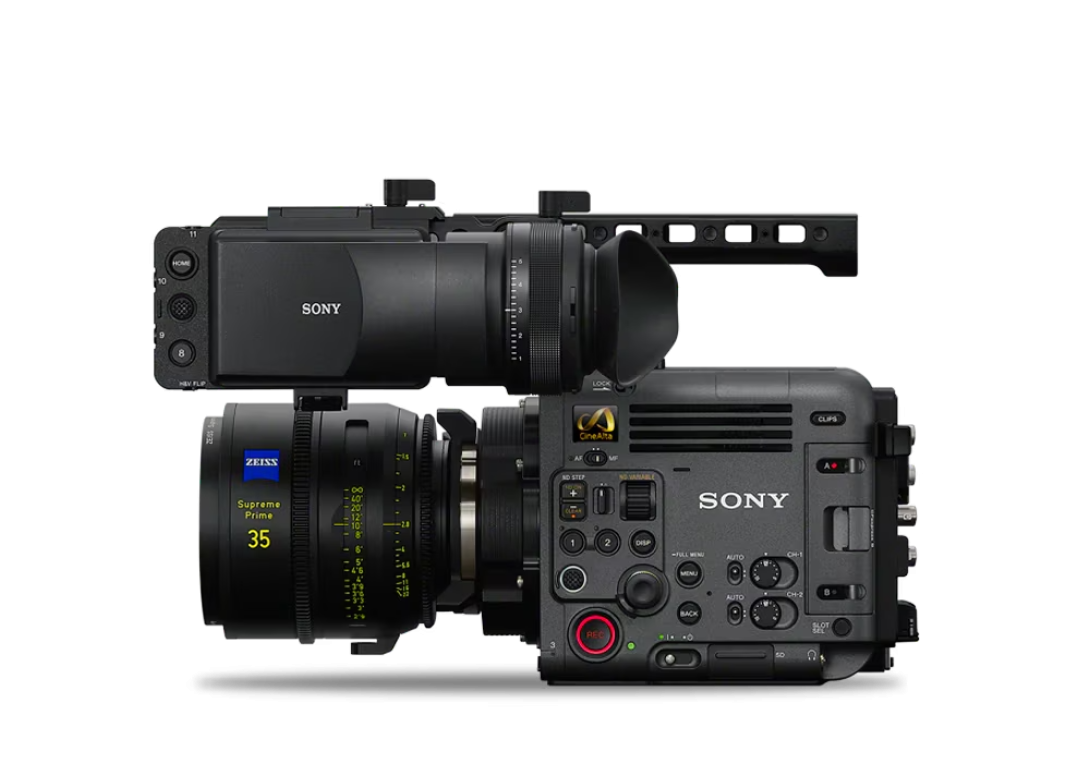
For an intimate production like White Shadow, the camera needed to support a small crew, tight spaces, naturalistic lighting, muted colour, and a workflow that could preserve quality into post. It needed to give the cinematographer confidence without slowing the production down.

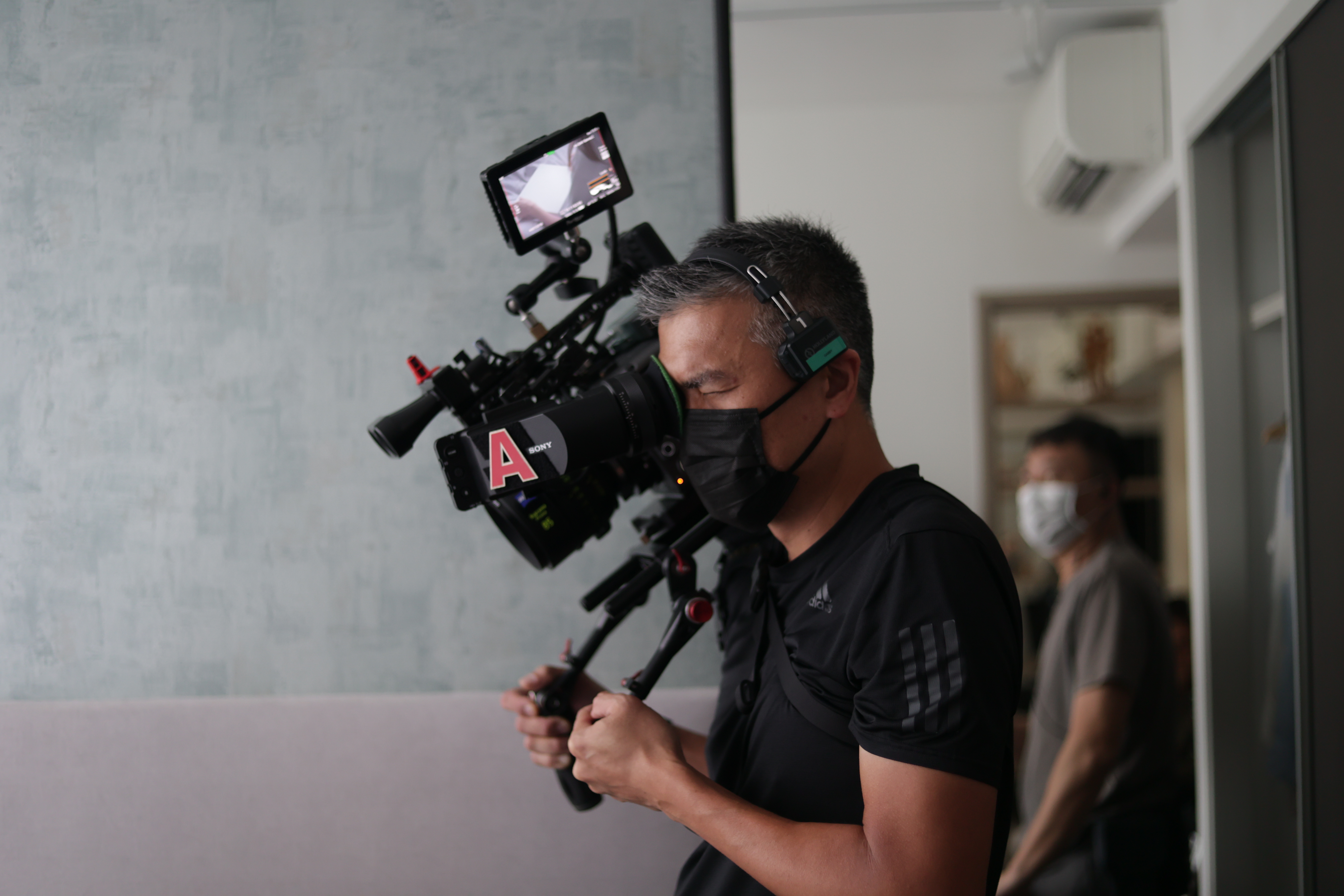
“The BURANO can be built modularly, which helped a lot. In open exteriors we ran a standard studio build, but when we needed to work in tighter spaces or give the actors more room, we stripped it down to its bare essentials. That smaller form factor (compared to VENICE) let me blend comfortably into the space.”
Its 16-bit X-OCN LT recording gave the team latitude for subtle colour work, especially with limited on-set lighting flexibility. Its dual base ISO also helped support practical lighting environments, where film lights had to coexist with available sources.
A Human Story, Quietly Illuminated
In the end, White Shadow is a reminder that the most powerful images are not always the loudest. Sometimes, they are the ones that wait. The ones that let silence deepen. The ones that stay with a face, a room, a shadow, or a passing train long enough for feeling to surface.

Through Teck Siang’s lens, Singapore’s everyday spaces become places of memory, tenderness, and transition. The film’s cool palette and soft light give shape to love and loss without overpowering them. Its restrained cinematography allows mortality not to eclipse the story, but to illuminate the urgency of care.
For other cinematographers approaching similarly intimate, character-driven work, Teck Siang offers a practical insight: “Do your camera tests with the actual actors, in conditions close to what you’ll face on set. It takes the technical anxiety off the table and lets you focus on the creative work — which is where everything really happens.”
Behind that process, BURANO served as the kind of filmmaking tool intimate stories often need most: capable, flexible, and unobtrusive. The right tool that did not get in the way.
Key Credits:
- Film: "White Shadow" (2026)
- Director: Gloria Chee
- Cinematography: Lim Teck Siang
- Colourist: Chen Junbin
- 1st AC: Daryl Nah
- Camera: Sony BURANO